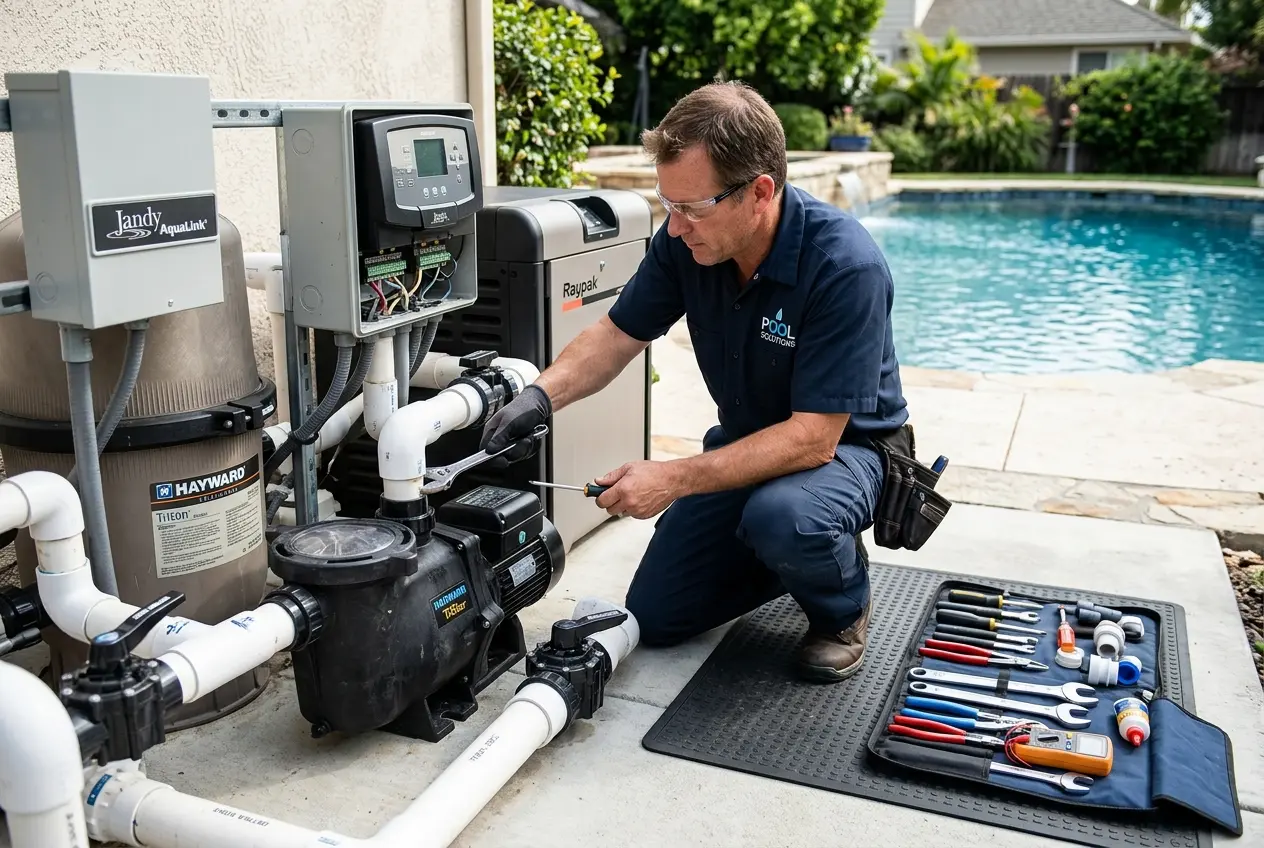
Miami's salty humidity demands different repair approaches than inland pools. We stock marine-grade pump seals and corrosion-resistant bonding wire specifically for coastal installations. Our technicians are trained to identify early signs of salt creep in automation systems before catastrophic failures occur.
Common repairs include replacing rusted heater headers on older systems, rebuilding pumps with stainless steel hardware, and upgrading control panels to NEMA 4X-rated enclosures that resist moisture intrusion. For waterfront properties, we install sacrificial anodes on ladders and lights to prevent galvanic corrosion where saltwater meets freshwater. All repairs include a corrosion audit of adjacent equipment vulnerable to similar failures.
Common repairs include replacing rusted heater headers on older systems, rebuilding pumps with stainless steel hardware, and upgrading control panels to NEMA 4X-rated enclosures that resist moisture intrusion. For waterfront properties, we install sacrificial anodes on ladders and lights to prevent galvanic corrosion where saltwater meets freshwater. All repairs include a corrosion audit of adjacent equipment vulnerable to similar failures.
Our Process
- 01 Step 1: Diagnostic testing under load to identify voltage drops from corroded connections
- 02 Step 2: Salt exposure assessment of all metallic components
- 03 Step 3: Marine-grade part installation with dielectric grease applications
- 04 Step 4: Post-repair water chemistry adjustment to prevent recurrence
Benefits
- Longer-lasting repairs using materials formulated for coastal climates
- Preventative upgrades reduce future breakdowns
- Same-day service for critical failures during peak season
- Transparent pricing with old parts returned to clients
Frequently Asked Questions
Why do my pool pumps fail faster than my neighbor's inland system?
Salt air accelerates corrosion on electrical components and bearing surfaces. We install coated motors and sealed bearings that typically last 2-3x longer in Miami.